
Dr. Hassan A. Aziz
What is keratoconus?
Keratoconus is a progressive corneal condition in which the normally round cornea becomes thinner and gradually bulges outward into a cone shape. This irregular curvature distorts how light enters the eye, causing blurred or distorted vision. The condition often begins in adolescence or early adulthood and may worsen over time. I diagnose keratoconus using corneal imaging, thickness mapping, and refractive assessment to detect subtle structural changes. Early detection significantly improves management options. Timely intervention protects long-term vision. For structured keratoconus treatment in Dubai and Abu Dhabi, arrange your evaluation today.
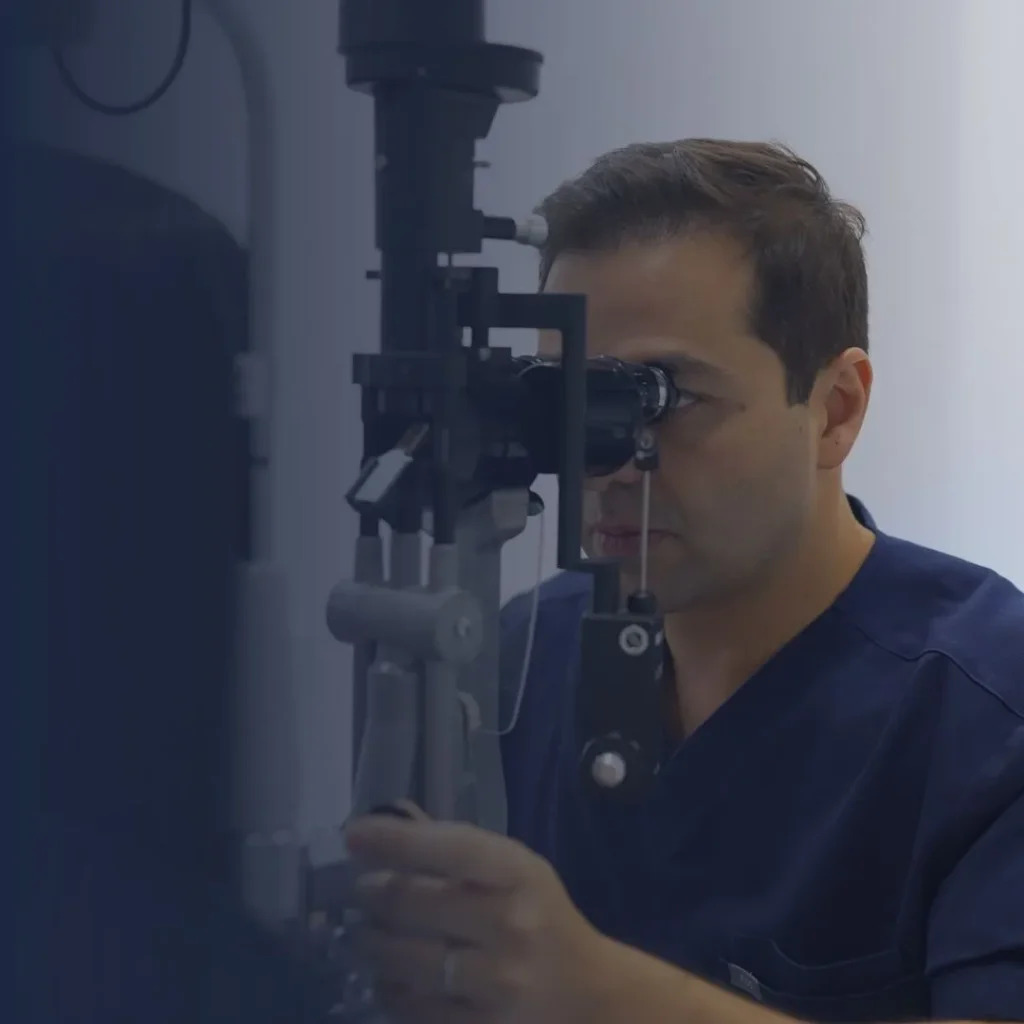

Advanced expertise, calm care, and clear guidance for every stage of your vision.

American Board-Certified Expertise
U.S. board-certified with advanced fellowships in retina and ocular oncology from leading international institutions.

Comfort-First Approach
Local anesthesia when possible, efficient in-clinic injections, and same-day discharge for many procedures.

Complex Case Readiness
Integrated retinal and ocular oncology expertise for serious conditions, managed with precision and discretion.
What are the symptoms of keratoconus?
Symptoms of keratoconus may include blurred vision, increasing astigmatism, light sensitivity, glare, and difficulty seeing clearly at night. Patients often notice frequent prescription changes or distorted images. As the cornea becomes more irregular, visual clarity decreases. Because progression can be gradual, routine monitoring is essential. I rely on advanced corneal mapping and structural imaging to assess severity accurately. Early diagnosis allows timely stabilization before significant vision loss occurs. Recognizing symptoms early supports better outcomes. If you experience visual distortion or rapid prescription changes, book your keratoconus treatment in Dubai and Abu Dhabi.
How is keratoconus diagnosed?
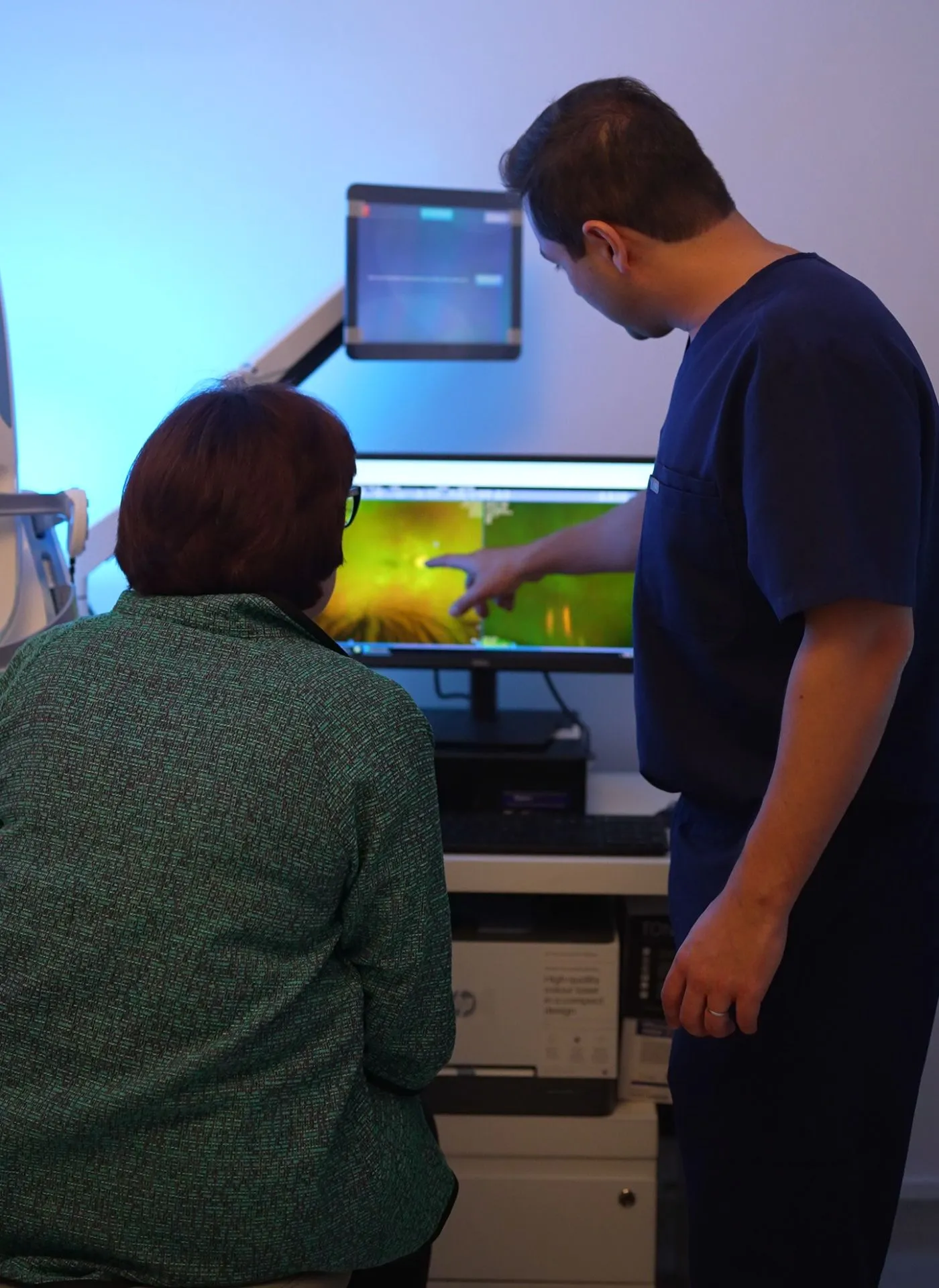
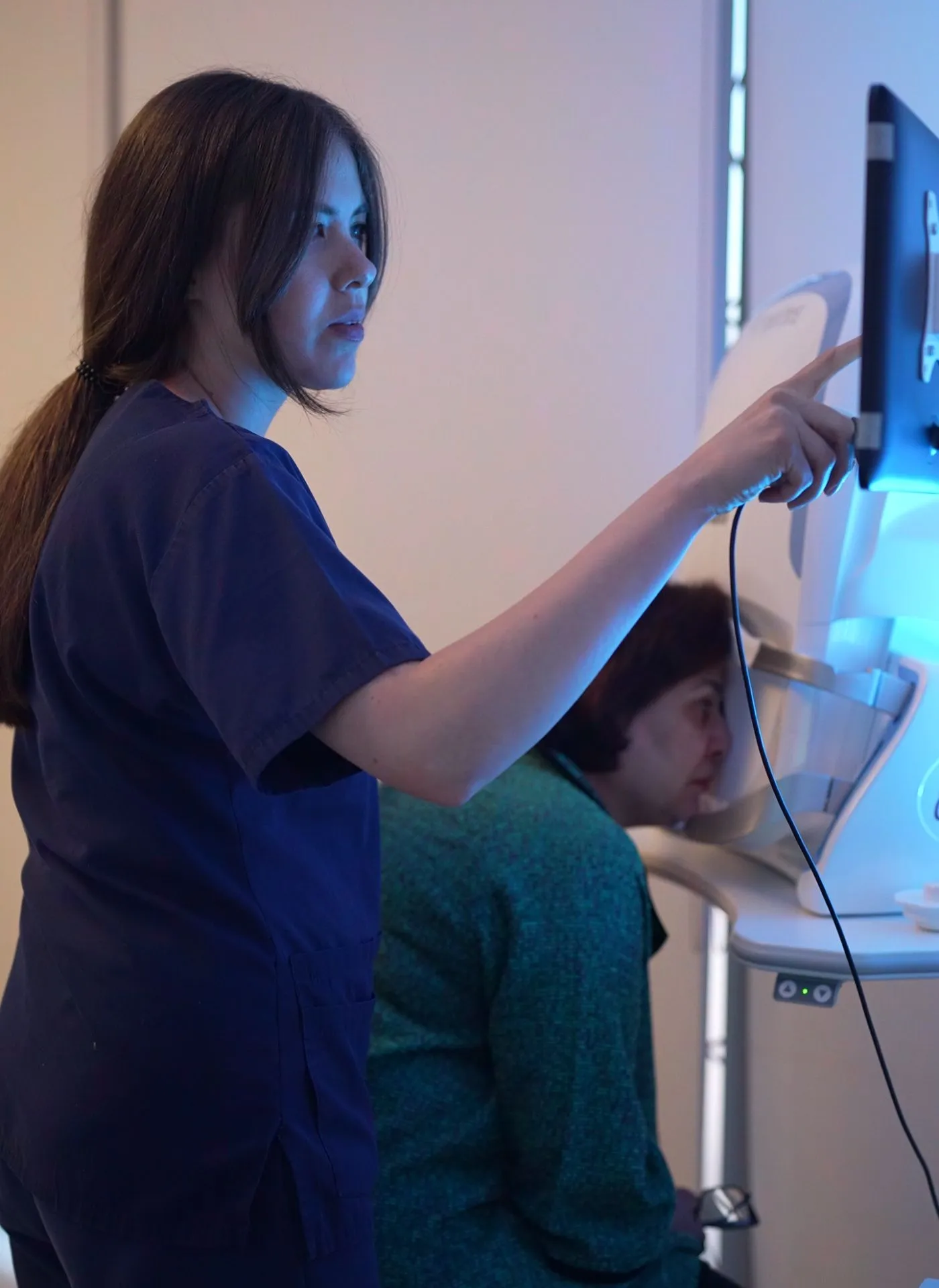
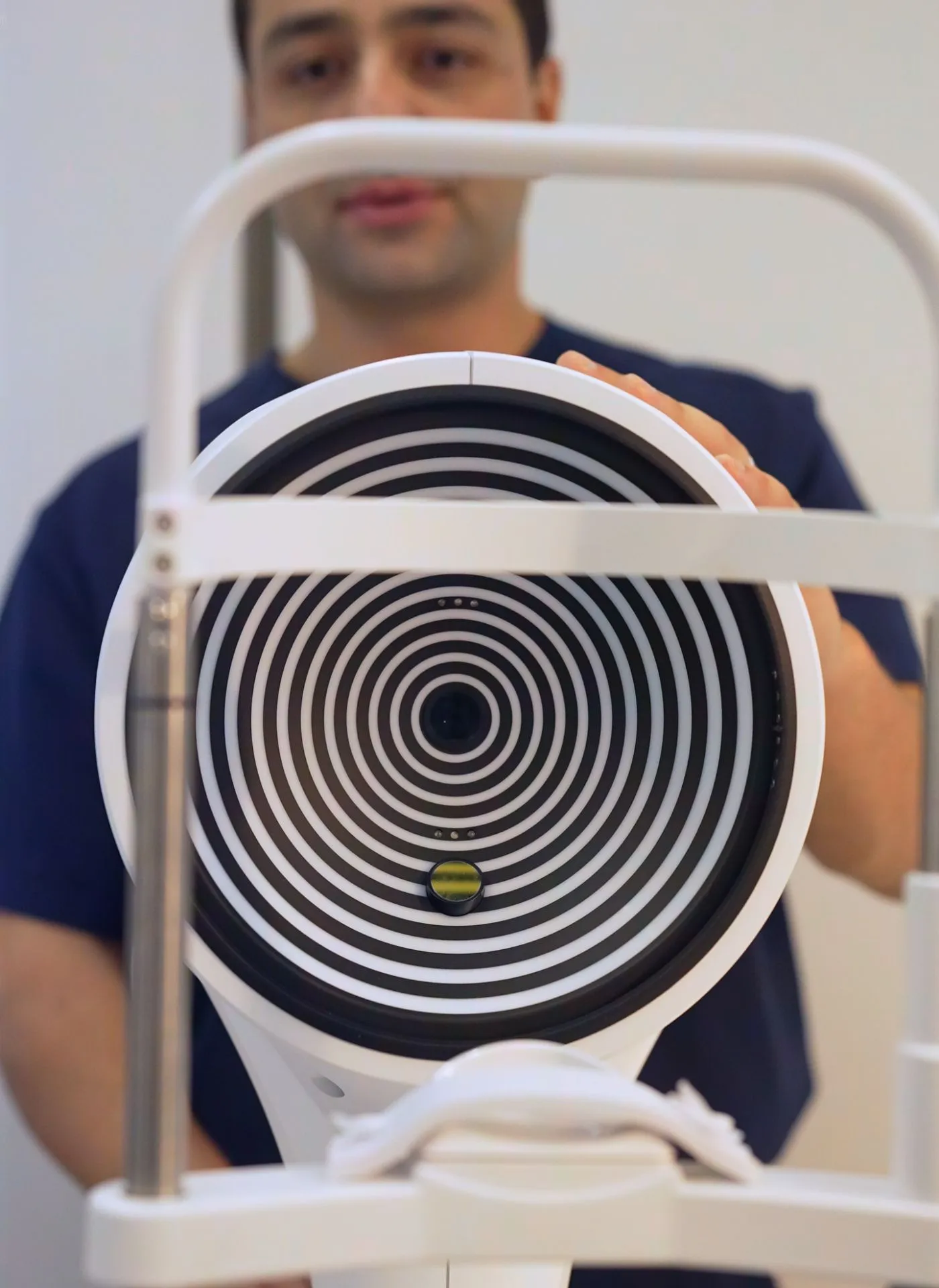
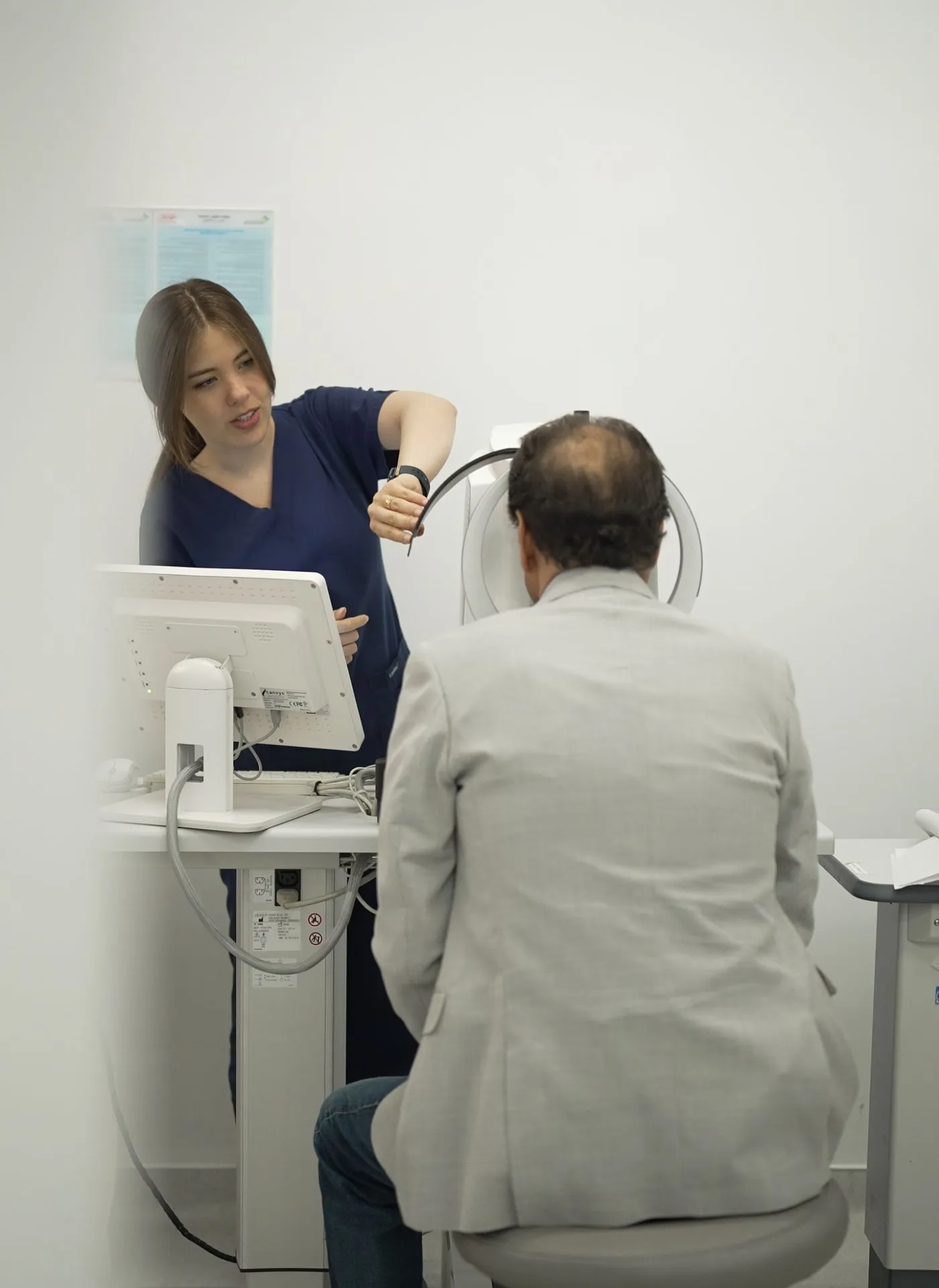
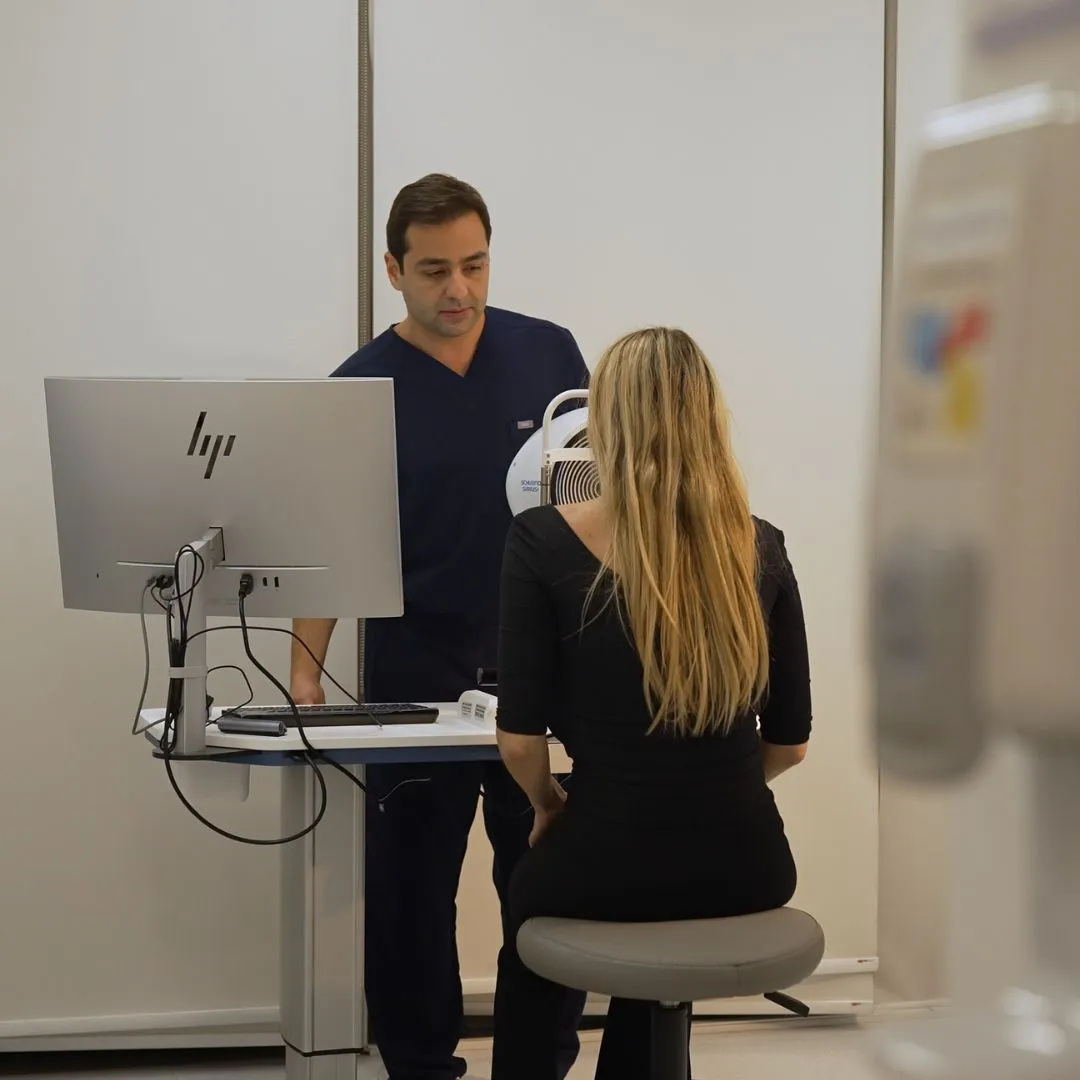
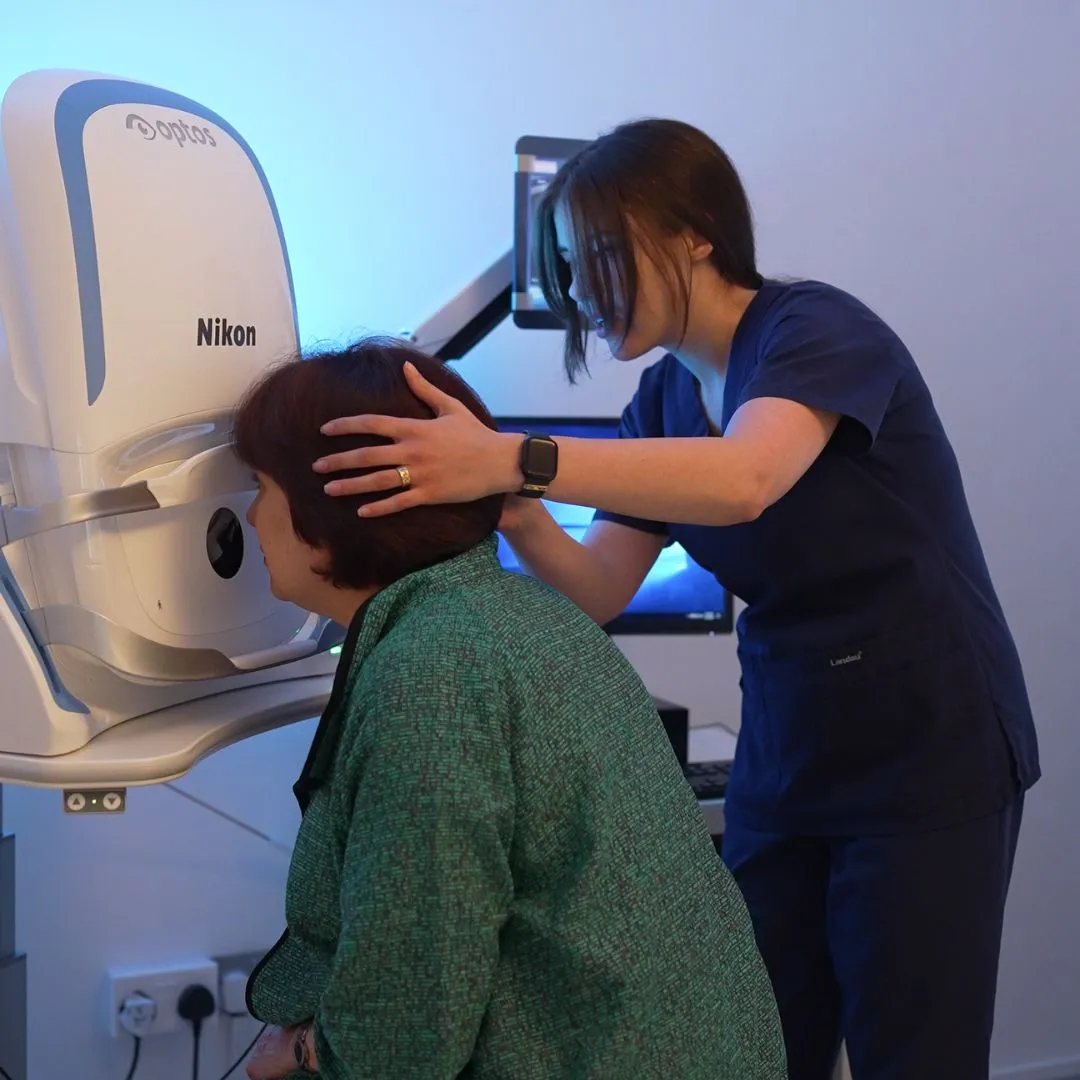
Keratoconus is diagnosed through comprehensive eye examination and specialized imaging. I perform corneal topography, tomography, pachymetry, and refractive analysis to evaluate curvature and thickness. These tests detect early corneal thinning and irregularity even before symptoms become severe. Diagnosis is based on structural findings rather than symptoms alone. Accurate staging guides appropriate management decisions. Early identification allows preventive treatments such as cross-linking to reduce progression. Structured follow-up ensures ongoing monitoring. For precise assessment and early keratoconus treatment in Dubai and Abu Dhabi, schedule your consultation.
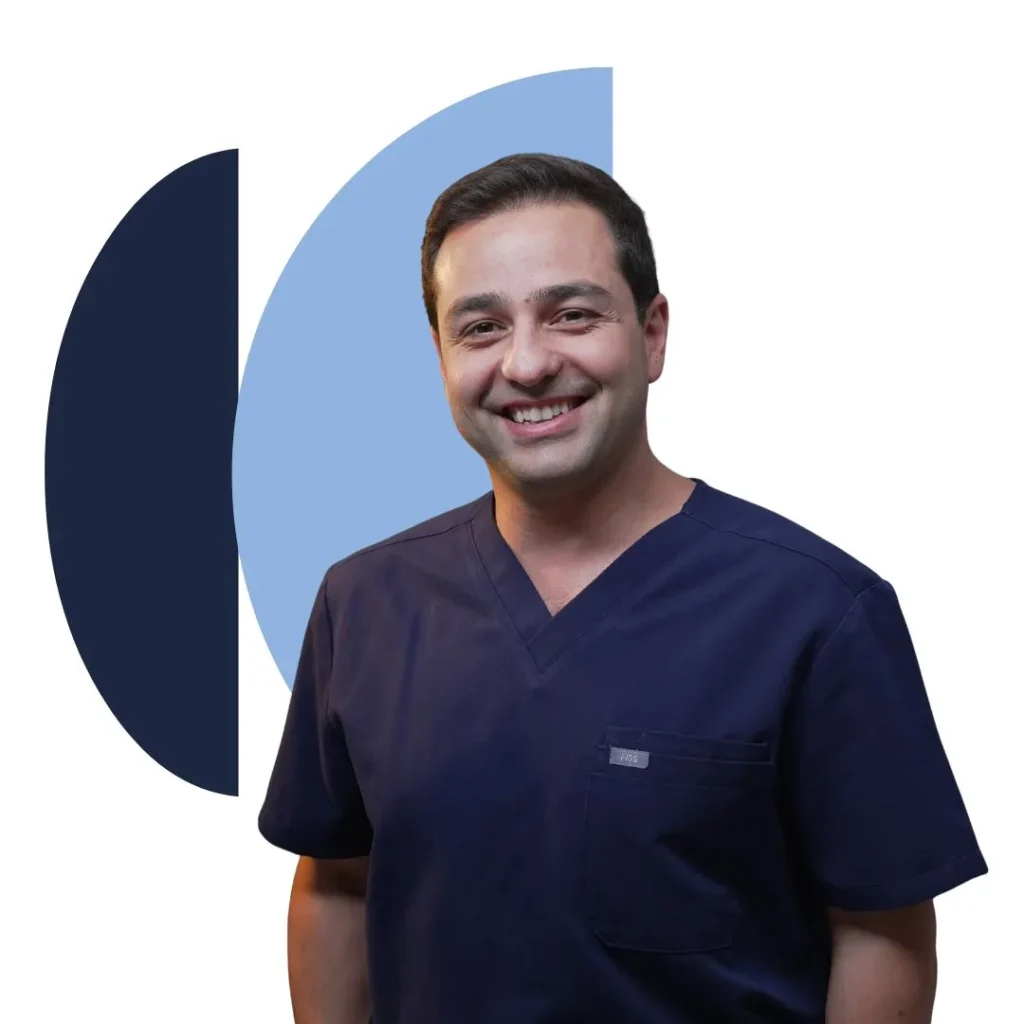
Dr. Hassan A. Aziz
OPHTHALMOLOGIST
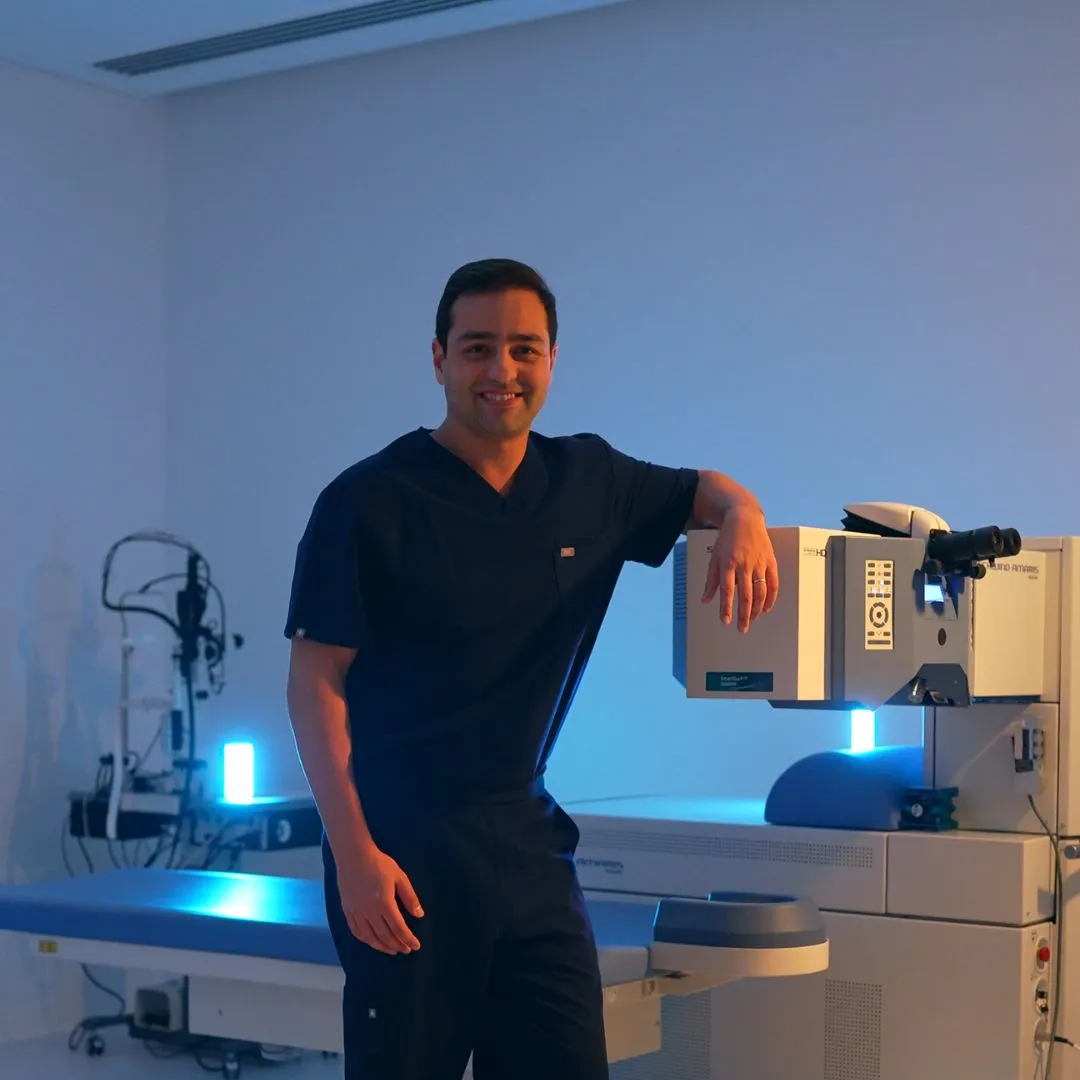
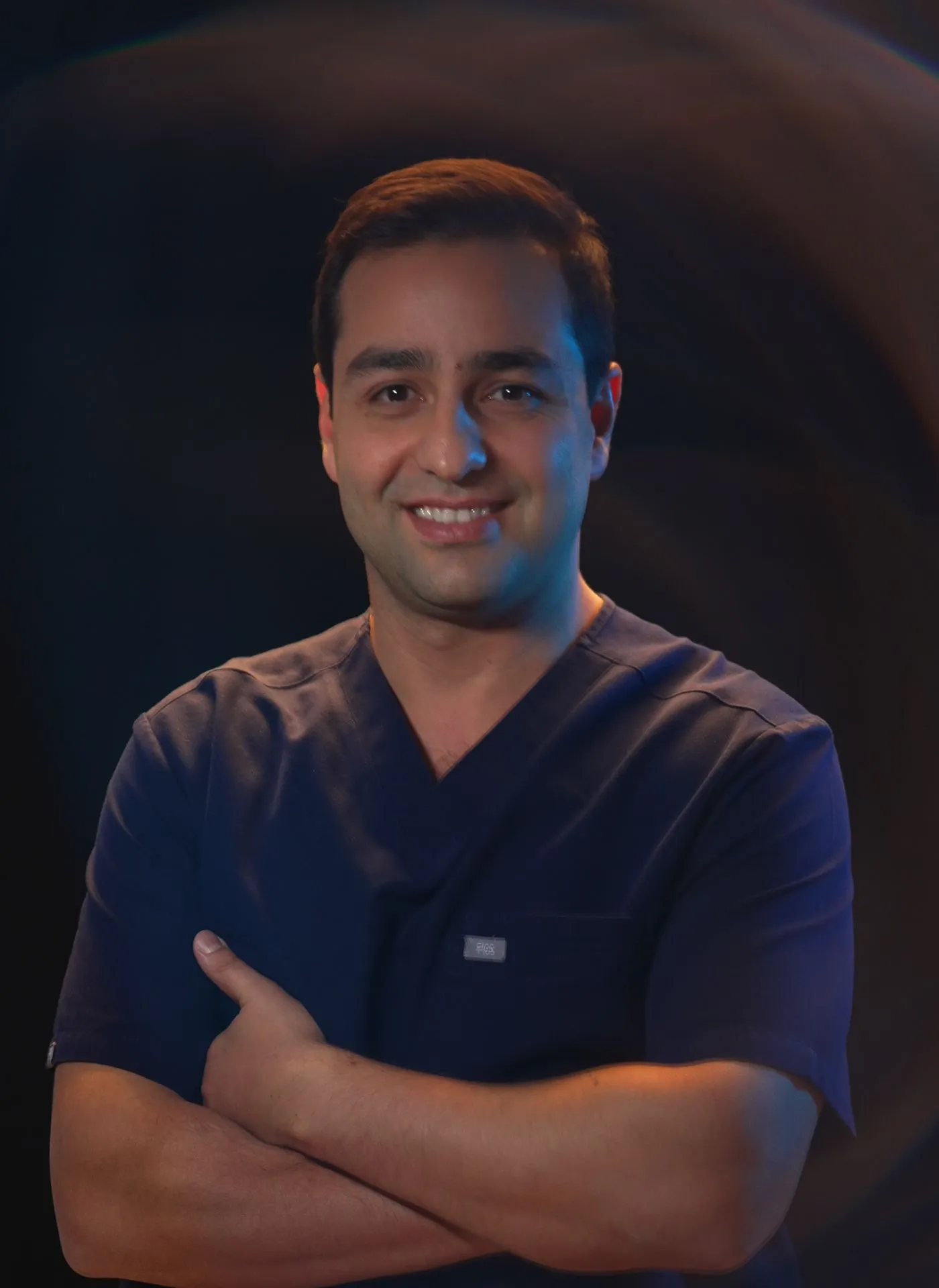
Dr. Hassan A. Aziz is an ophthalmologist specializing in retinal surgery, cataract surgery, and advanced laser eye treatments. He provides precise, patient-focused care in Dubai and Abu Dhabi.

Dr. Maya Rahim
OPTOMETRIST
Dr. Maya Rahim is the optometrist who performs the first eye examinations and initial vision assessments. She helps guide patients through their first visit and supports the diagnostic process before treatment.
What causes keratoconus to develop?
The exact cause of keratoconus is not fully understood, but genetic predisposition and environmental factors may contribute. Chronic eye rubbing, allergic eye disease, and family history increase risk. Structural weakness in corneal collagen fibers leads to progressive thinning and deformation. I carefully evaluate risk factors and corneal integrity during examination. While the condition cannot always be prevented, early monitoring reduces the risk of advanced complications. Timely intervention supports long-term stability. If you have risk factors or family history, consider proactive keratoconus treatment in Dubai and Abu Dhabi.
What are the treatment options for keratoconus?
Keratoconus treatment in Dubai and Abu Dhabi depends on disease stage and severity. Early cases may be managed with glasses or specialized contact lenses. When progression is detected, corneal cross-linking (CXL) is often recommended to stabilize the cornea. In selected cases, corneal ring implants may improve shape and clarity. Advanced cases may require corneal transplantation. I tailor each treatment plan based on detailed imaging and individual needs. Early stabilization prevents further deterioration. For personalized keratoconus treatment in Dubai and Abu Dhabi, arrange your consultation.
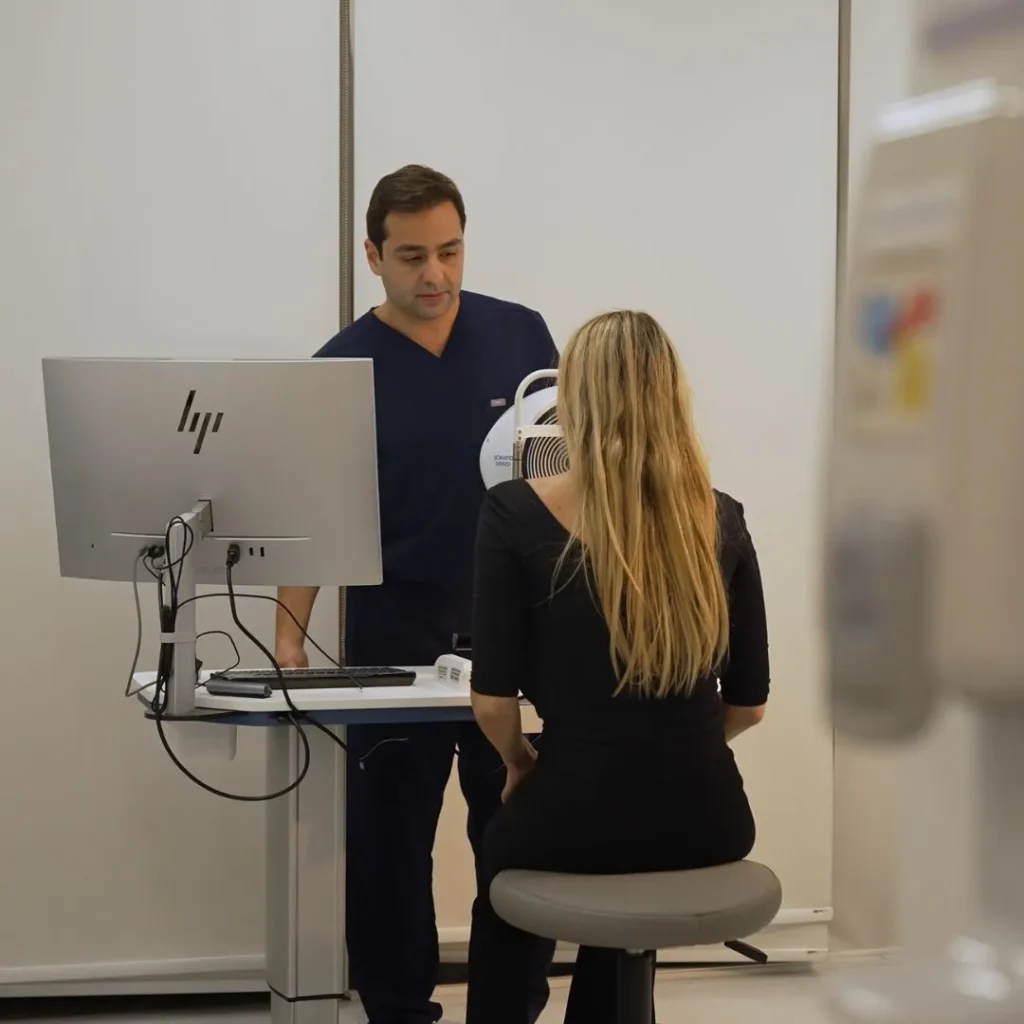
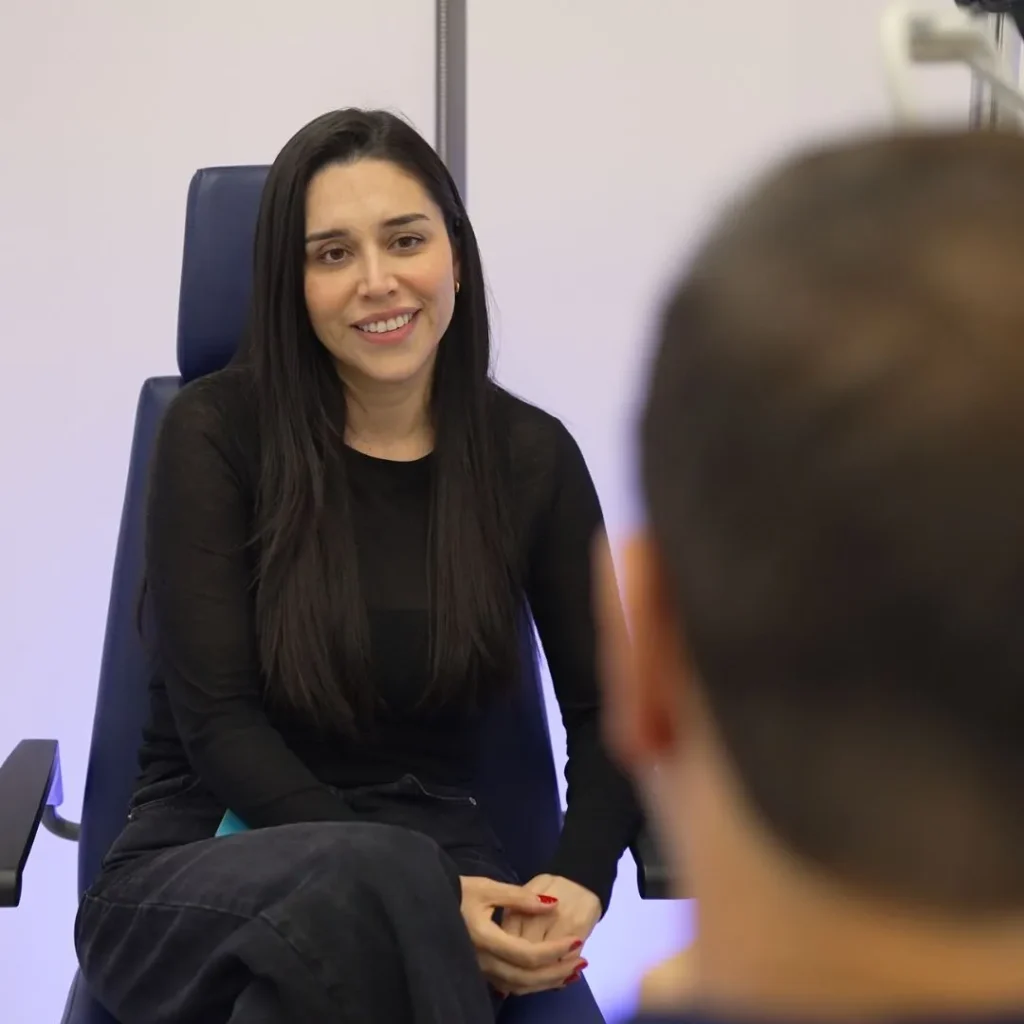

Confident decisions begin with expert guidance.
Reach out today to receive structured, specialist-led care designed around your comfort, safety, and visual goals.
What is keratoconus cross-linking treatment?
Corneal cross-linking (CXL) is a procedure designed to strengthen weakened corneal tissue and slow progression. During treatment, riboflavin drops are applied, followed by controlled ultraviolet light exposure to enhance collagen bonding. The goal is stabilization rather than vision correction. The procedure is typically performed under topical anesthesia and monitored carefully. Structured follow-up ensures proper healing. Cross-linking is most effective when performed early. Preserving corneal strength reduces the need for more invasive surgery later. To determine if cross-linking is appropriate, schedule your keratoconus treatment in Dubai and Abu Dhabi.
Can keratoconus be cured?
Keratoconus cannot be completely cured, but progression can often be stabilized with timely treatment. Once corneal thinning occurs, structural changes are permanent. My focus is early detection, cross-linking when indicated, and structured monitoring to prevent worsening. Advanced cases may require surgical correction, but many patients maintain functional vision with appropriate care. I consult in Dubai at Emirates Hospital Day Surgery & Medical Center and in Abu Dhabi at Harley Street Medical Center. For specialist-led keratoconus treatment in Dubai and Abu Dhabi, book your appointment with Dr. Hassan A. Aziz today.

























What is the cost of keratoconus treatment in Dubai and Abu Dhabi?
The cost of keratoconus treatment in Dubai and Abu Dhabi depends on the stage of the condition and the type of intervention required. Early management may involve glasses or specialized contact lenses, while progressive cases may require corneal cross-linking, ring implants, or surgical procedures. Comprehensive evaluation includes corneal topography, tomography, and thickness mapping to determine the most appropriate plan. I believe in transparent communication regarding fees before proceeding. Early stabilization often reduces the need for more complex interventions later. For personalized guidance on keratoconus treatment in Dubai and Abu Dhabi, schedule your consultation.
How long does recovery take after keratoconus treatment?
Recovery after keratoconus treatment in Dubai and Abu Dhabi varies depending on the procedure performed. Following corneal cross-linking, initial healing typically occurs within several days, though visual clarity may fluctuate for a few weeks. Mild discomfort or light sensitivity can occur temporarily. I provide structured aftercare instructions, medicated drops, and scheduled follow-up visits to ensure safe healing. If ring implants or transplantation are required, recovery may be longer. Careful monitoring supports stable outcomes. To receive a personalized recovery plan for keratoconus treatment in Dubai and Abu Dhabi, book your appointment today.
From Dubai Marina
From Dubai Marina: Take Sheikh Zayed Road E11 toward Abu Dhabi, exit at Hessa Street D61, follow signs to Dubai Motor City.
From Dubai Healthcare City
From Dubai Healthcare City: Drive via Sheikh Zayed Road E11 toward Abu Dhabi, take Hessa Street exit, continue to Dubai Motor City.
Where to parking
Parking is available within Dubai Motor City near Emirates Hospital Day Surgery & Medical Center. Visitors can use the dedicated hospital parking areas and nearby public spaces. Access is clearly signposted, with convenient drop-off points directly at the medical center entrance.
From Dubai Marina: Take Sheikh Zayed Road E11 toward Abu Dhabi, exit at Hessa Street D61, follow signs to Dubai Motor City.
From Dubai Healthcare City: Drive via Sheikh Zayed Road E11 toward Abu Dhabi, take Hessa Street exit, continue to Dubai Motor City.
From Arabian Ranches: Head east on Umm Suqeim Street D63, connect to Hessa Street D61, follow signs to Motor City.
From Al Barsha: Take Hessa Street D61 southbound, continue straight toward Dubai Motor City, follow hospital signage.
From JVC: Drive along Hessa Street D61 toward Dubai Motor City, follow directional signs to Emirates Hospital.
From Saadiyat Island
From Saadiyat Island: Drive via Sheikh Khalifa Bin Zayed Street E12 toward central Abu Dhabi, continue to Al Kasir area, follow signs to Harley Street Medical Center.
Al Reem Island
From Al Reem Island: Take Al Reem Street toward Abu Dhabi city center, continue via Zayed The First Street toward Al Kasir, then follow directions to Harley Street Medical Center.
Where to parking
Parking is available near Harley Street Medical Center in Al Marina. Visitors can use designated medical center parking spaces and nearby public parking areas. Clear signage guides you to the entrance, with convenient drop-off access directly in front of the facility.
From Saadiyat Island: Take Sheikh Khalifa Bridge toward Abu Dhabi city, follow Corniche Road, then turn onto Al Kasir toward Al Marina.
From Al Reem Island: Cross Al Reem to Abu Dhabi via Hazza Bin Zayed Street, follow Corniche Road toward Al Marina.
From Corniche Area: Drive west along Corniche Road, continue toward Al Marina, turn onto Al Kasir Road.
From Khalidiya: Head toward Corniche Road, drive westbound following signs to Al Marina and Al Kasir.
From Al Bateen: Take Al Khaleej Al Arabi Street, connect to Corniche Road, continue toward Al Marina district.





Are there any side effects of keratoconus treatment?
Keratoconus treatment in Dubai and Abu Dhabi is generally safe when performed with appropriate screening and follow-up. After cross-linking, patients may experience temporary discomfort, redness, light sensitivity, or blurred vision during early healing. More advanced procedures carry additional risks, which I explain clearly before treatment. Careful diagnostic planning reduces complications and improves predictability. Most side effects are short term and manageable with proper care. Long-term monitoring ensures stability. To discuss potential risks and benefits specific to your case, arrange your consultation for keratoconus treatment in Dubai and Abu Dhabi.
What are the different stages of keratoconus?
Keratoconus progresses through stages ranging from mild corneal irregularity to advanced thinning and scarring. In early stages, vision may be corrected with glasses. Moderate stages often require specialized contact lenses for clarity. Advanced stages can involve significant thinning and distortion, sometimes requiring surgical intervention. I assess severity using corneal imaging, thickness mapping, and refractive analysis to guide treatment decisions. Early detection significantly improves stabilization options. Structured follow-up helps monitor progression over time. For accurate staging and personalized keratoconus treatment in Dubai and Abu Dhabi, schedule your evaluation.
How can keratoconus affect vision?
Keratoconus affects vision by causing the cornea to become irregular and cone-shaped, distorting incoming light. Patients may experience blurred vision, increasing astigmatism, glare, and difficulty seeing at night. Frequent prescription changes are common as the condition progresses. Without appropriate management, vision may continue to decline. I rely on advanced diagnostic imaging to detect structural changes early. Stabilizing progression preserves functional vision and reduces long-term complications. Early intervention is essential for better outcomes. If you notice persistent visual distortion, arrange your keratoconus treatment in Dubai and Abu Dhabi.
What are the best lenses for keratoconus?
The best lenses for keratoconus depend on disease stage and corneal shape. In mild cases, glasses may provide adequate correction. As irregularity increases, rigid gas permeable (RGP) lenses, scleral lenses, or hybrid lenses often deliver improved visual clarity by creating a smoother refractive surface. I assess corneal topography carefully before recommending lens options. Proper fitting is essential to ensure comfort and optimal vision. Lenses do not cure keratoconus but can significantly enhance daily function. For tailored advice regarding lenses and keratoconus treatment in Dubai and Abu Dhabi, book your consultation.
What is the role of contact lenses in keratoconus treatment?
Contact lenses play a key role in keratoconus treatment in Dubai and Abu Dhabi by improving visual clarity when glasses are insufficient. Specialized lenses such as RGP or scleral lenses create a smooth optical surface over the irregular cornea. They enhance vision but do not stop progression, which is why monitoring remains essential. In progressive cases, I may recommend cross-linking to stabilize the cornea while continuing lens use for clarity. Structured follow-up ensures proper fit and corneal health. For comprehensive keratoconus treatment in Dubai and Abu Dhabi, schedule your appointment today.
How is keratoconus treated with surgery?
Surgical keratoconus treatment in Dubai and Abu Dhabi is considered when vision cannot be adequately corrected with glasses or contact lenses. Options may include corneal ring implants (ICRS) to reshape the cornea or, in advanced cases, corneal transplantation. I determine suitability through detailed corneal imaging, thickness analysis, and structural assessment. The goal of surgery is to improve corneal shape and stabilize vision, not to cure the condition. Careful patient selection improves safety and predictability. For personalized evaluation of surgical keratoconus treatment in Dubai and Abu Dhabi, schedule your consultation.
ICRS details
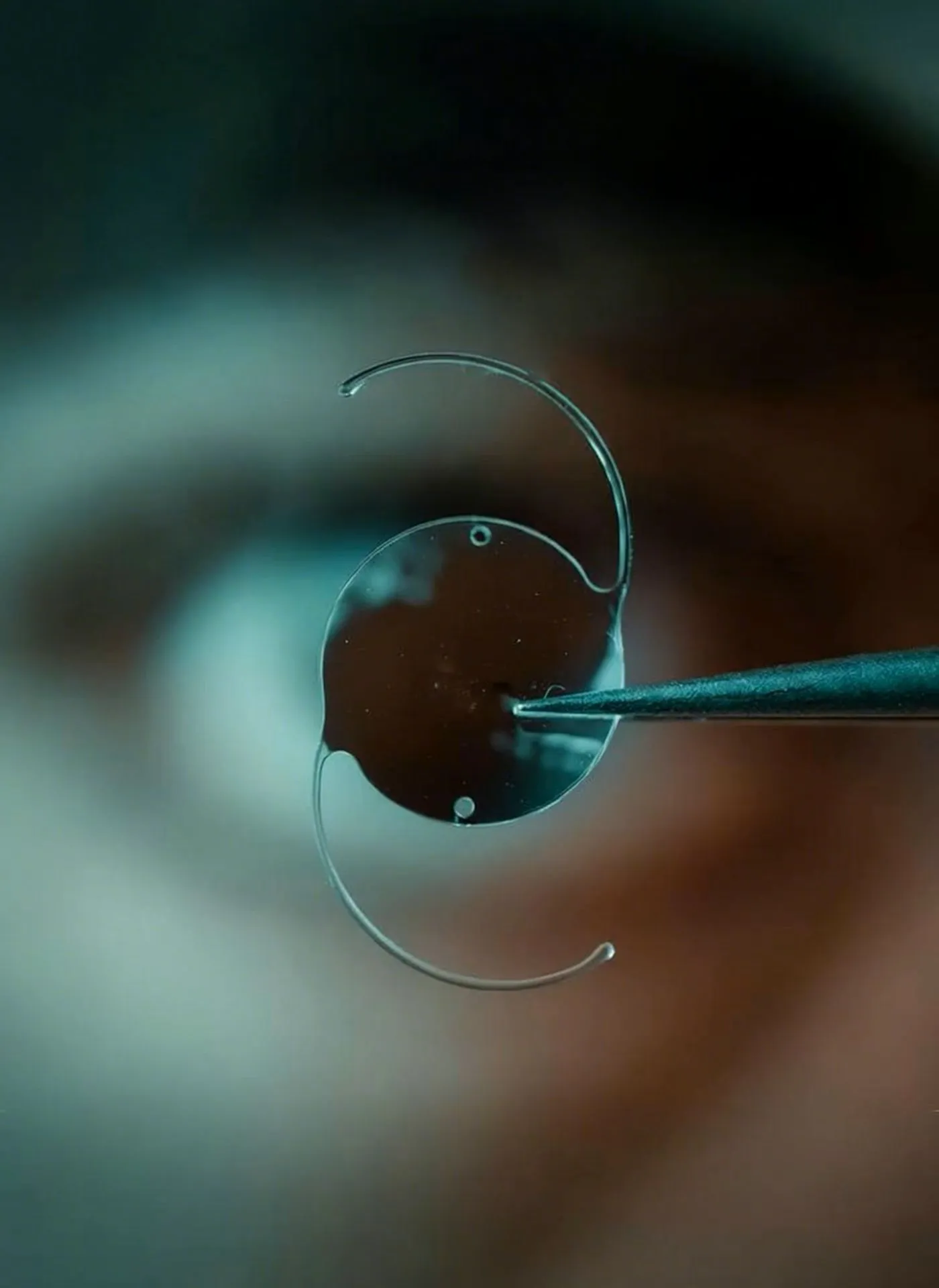
Intracorneal Ring Segments (ICRS) are small, semi-circular implants inserted into the cornea to improve its shape. As part of keratoconus treatment in Dubai and Abu Dhabi, I use advanced imaging to plan precise placement. The rings flatten the cone-like protrusion, improving visual quality and potentially reducing dependence on contact lenses. The procedure is typically performed under local anesthesia and is minimally invasive. While ICRS can enhance vision, they do not stop disease progression, which may require cross-linking. To explore ICRS as part of keratoconus treatment in Dubai and Abu Dhabi, book your evaluation.
What is keratoconus and how does it affect the eye?
Keratoconus is a progressive condition in which the cornea becomes thinner and bulges outward into a cone shape. This structural change alters how light enters the eye, causing distorted or blurred vision. Patients may develop increasing astigmatism and frequent prescription changes. I diagnose keratoconus using corneal topography, tomography, and pachymetry to detect early thinning and irregularity. Without proper management, vision may continue to decline. Early stabilization helps preserve clarity and reduce complications. For comprehensive keratoconus treatment in Dubai and Abu Dhabi, arrange your consultation.
What are the early signs of keratoconus?
Early signs of keratoconus may include blurred vision, increasing astigmatism, glare, light sensitivity, and frequent changes in glasses prescription. Some patients notice difficulty seeing clearly at night. Because progression can be gradual, symptoms may initially seem mild. I rely on advanced corneal imaging to identify subtle structural changes before severe vision loss occurs. Early detection allows timely intervention such as cross-linking to slow progression. Regular monitoring is essential for high-risk individuals. If you notice visual distortion, schedule your keratoconus treatment in Dubai and Abu Dhabi.
Can keratoconus be treated with contact lenses?
Yes, contact lenses play an important role in keratoconus treatment in Dubai and Abu Dhabi. When glasses are insufficient, specialized lenses such as rigid gas permeable or scleral lenses provide improved visual clarity by creating a smooth optical surface over the irregular cornea. Proper fitting is essential to maintain comfort and protect corneal health. While lenses improve vision, they do not stop progression, which may require cross-linking. Structured follow-up ensures safe long-term use. For guidance on lens options within your keratoconus treatment in Dubai and Abu Dhabi, book your consultation.
What is the success rate of keratoconus cross-linking?
Corneal cross-linking has a high success rate in stabilizing keratoconus progression when performed at an early stage. The procedure strengthens corneal collagen fibers, reducing further thinning and deformation. Most patients experience stabilization, while some may notice mild visual improvement over time. I perform detailed imaging before recommending treatment to maximize effectiveness. Long-term monitoring remains essential after the procedure. Early intervention provides the best outcomes. To assess whether cross-linking is suitable for you, schedule your keratoconus treatment in Dubai and Abu Dhabi today.
What is the cost of keratoconus treatment in Dubai?
The cost of keratoconus treatment in Dubai and Abu Dhabi depends on the stage of the condition and the procedure required. Early management with specialized contact lenses differs from advanced options such as corneal cross-linking, ICRS implantation, or corneal transplantation. A comprehensive evaluation includes corneal topography, tomography, and thickness mapping, which guide treatment planning. I always explain the recommended approach and associated fees clearly before proceeding. Early stabilization often reduces the need for more complex surgery later. For personalized assessment and detailed cost information, schedule your keratoconus treatment in Dubai and Abu Dhabi.
Is keratoconus surgery painful?
Keratoconus treatment in Dubai and Abu Dhabi involving surgery is typically performed under local anesthesia with numbing drops, so the procedure itself is not painful. You may feel mild pressure during the intervention. Afterward, temporary discomfort, light sensitivity, or irritation can occur depending on the technique used. I provide medicated eye drops, protective guidance, and structured follow-up visits to support healing and comfort. Most symptoms are manageable and improve within days to weeks. My priority is safety and reassurance throughout recovery. To discuss surgical options, book your keratoconus treatment in Dubai and Abu Dhabi.
Can keratoconus be cured with surgery?
Keratoconus cannot be completely cured, even with surgery. Procedures such as corneal cross-linking or intracorneal ring segments (ICRS) aim to stabilize or improve corneal shape, not reverse structural changes entirely. In advanced cases, corneal transplantation may restore clarity, but it does not eliminate the underlying predisposition. My goal is early detection and timely stabilization to prevent progression. Long-term monitoring remains essential after any intervention. Realistic expectations are central to treatment planning. To explore safe and structured keratoconus treatment in Dubai and Abu Dhabi, arrange your consultation.
What are the risks associated with keratoconus treatment?
Keratoconus treatment in Dubai and Abu Dhabi is generally safe when guided by thorough diagnostic evaluation. Potential risks vary depending on the procedure and may include temporary discomfort, light sensitivity, corneal haze, infection, or delayed healing. Advanced surgical interventions carry additional considerations, which I explain clearly before treatment. Careful screening and structured follow-up reduce complications significantly. Most side effects are temporary and manageable with appropriate care. Informed decision-making is essential for optimal outcomes. To understand the risks specific to your case, schedule your keratoconus treatment in Dubai and Abu Dhabi.
How long does it take for keratoconus surgery to heal?
Healing time after keratoconus treatment in Dubai and Abu Dhabi depends on the type of procedure performed. After cross-linking, the surface typically heals within several days, although vision may fluctuate for weeks. Ring implantation recovery may be faster, while corneal transplantation requires longer stabilization. I provide structured aftercare instructions, protective measures, and regular follow-up visits to monitor healing progress. Most patients gradually resume daily activities as comfort improves. Close monitoring ensures stability and reduces complications. For personalized recovery guidance, book your keratoconus treatment in Dubai and Abu Dhabi.
Is keratoconus genetic?
Keratoconus can have a genetic component, particularly in patients with a family history of the condition. While not all cases are inherited, genetic predisposition combined with environmental factors may contribute to development. I carefully assess family history and risk factors during evaluation. Early screening is especially important if relatives have been diagnosed. Identifying the condition at an early stage allows timely stabilization and reduces long-term complications. Proactive monitoring protects vision. If you have a family history or concerns, schedule your keratoconus treatment in Dubai and Abu Dhabi for professional assessment.
Follow Me on Social Media
Stay informed about eye health, advanced treatments, and practical vision advice. I share educational insights, updates, and guidance to help you make confident decisions about your eyesight.
@azizophthalmology