What Happens During LASIK Surgery
Many patients who are considering vision correction ask the same question: what happens during LASIK surgery? Understanding the process can help reduce anxiety and make the experience feel much more predictable and comfortable.
LASIK is one of the most commonly performed procedures for correcting refractive errors such as myopia, hyperopia, and astigmatism. It works by reshaping the cornea so that light focuses properly on the retina, allowing clearer vision without relying as heavily on glasses or contact lenses.
Despite its popularity, many people imagine the procedure as complicated or uncomfortable. In reality, LASIK is typically quick, carefully planned, and performed with extremely precise technology. Most patients are surprised by how short the procedure is and how smoothly the process unfolds.
Before recommending LASIK, I always perform detailed testing to ensure the treatment is appropriate for the patient’s eyes. If LASIK is not the safest option, I explain alternative solutions that may provide better outcomes.
In this article, I will explain what happens before, during, and after LASIK surgery, how the eye is prepared for treatment, what the patient experiences during the procedure, and how recovery typically progresses. Understanding each step can help patients approach the decision with confidence and realistic expectations.
What is LASIK surgery and why is it performed?
LASIK stands for Laser-Assisted In Situ Keratomileusis, a procedure designed to improve vision by reshaping the cornea with a laser.
The cornea is the transparent dome-shaped surface at the front of the eye. Its shape plays a crucial role in how light enters the eye and focuses on the retina. When the cornea is not shaped ideally, light does not focus correctly, causing blurred vision.
LASIK corrects this problem by modifying the corneal curvature using a highly precise excimer laser.
This procedure is commonly used to treat:
- Myopia (nearsightedness) – difficulty seeing distant objects clearly
- Hyperopia (farsightedness) – difficulty focusing on near objects
- Astigmatism – irregular corneal shape causing distorted vision
The goal of LASIK is to improve how light focuses in the eye so that vision becomes clearer and dependence on corrective lenses may be reduced.
However, LASIK is not suitable for every patient. The cornea must have sufficient thickness and stability to safely undergo the reshaping process. During the initial evaluation, I carefully examine the eye using advanced diagnostic imaging to determine whether LASIK is appropriate.
Some patients may benefit from other refractive procedures instead. The most important principle is always choosing the treatment that best protects the long-term health of the eye.
If you want to understand the available options for vision correction, you can explore the section dedicated to laser vision correction treatments.
How is the eye prepared before LASIK surgery?
Before LASIK surgery begins, careful preparation is essential to ensure safety and precision.
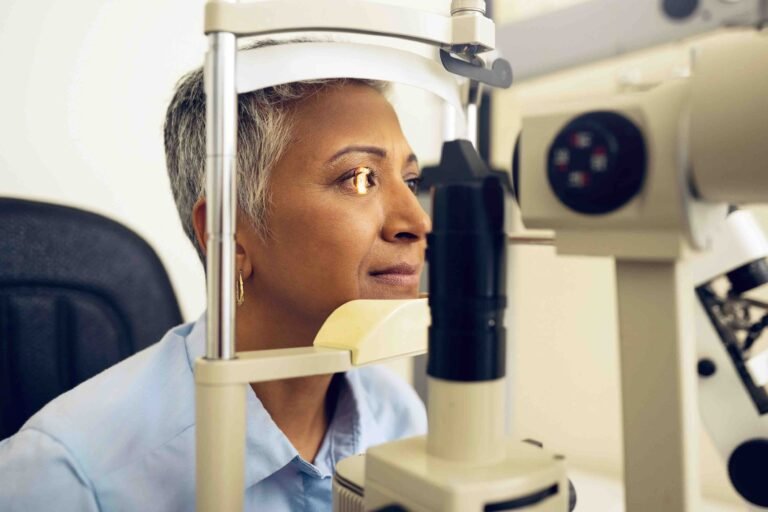
The process actually starts long before the procedure day. During the initial consultation, patients first undergo a detailed examination with the optometrist, who performs multiple diagnostic tests before the surgical evaluation.
These tests help measure several important characteristics of the eye, including:
- Corneal thickness
- Corneal shape and curvature
- Visual prescription
- Tear film quality
- Overall eye health
Advanced imaging systems allow me to evaluate the cornea in great detail. These measurements help determine whether the cornea can safely undergo laser reshaping.
On the day of the procedure, preparation is straightforward. Patients usually arrive at the clinic and undergo a brief recheck to confirm the treatment plan.
Before the procedure begins:
- Numbing eye drops are applied to prevent discomfort
- The eye area is gently cleaned
- A small device may be used to keep the eyelids open during the procedure
Patients remain awake during LASIK surgery, but the numbing drops ensure that the eye stays comfortable.
Many patients worry about blinking or moving during the procedure. Modern laser systems include tracking technology that monitors eye position throughout the treatment, helping maintain accuracy.
Once the eye is prepared and the patient is comfortable, the surgical steps begin.
If you would like to learn more about preparation for refractive procedures, you can explore the section dedicated to laser vision correction evaluation.
What happens during LASIK surgery step by step?
One of the most common concerns patients have is understanding exactly what happens during LASIK surgery step by step.
Although the procedure sounds complex, the actual process is usually very fast. Most treatments take only a few minutes per eye.
The procedure generally involves several key stages.
1. Creating the corneal flap
The first step involves creating a thin flap on the surface of the cornea. In modern LASIK procedures, this flap is often created using a femtosecond laser, which allows extremely precise and controlled tissue separation.
The flap is gently lifted to expose the inner layer of the cornea.
2. Reshaping the cornea with the excimer laser
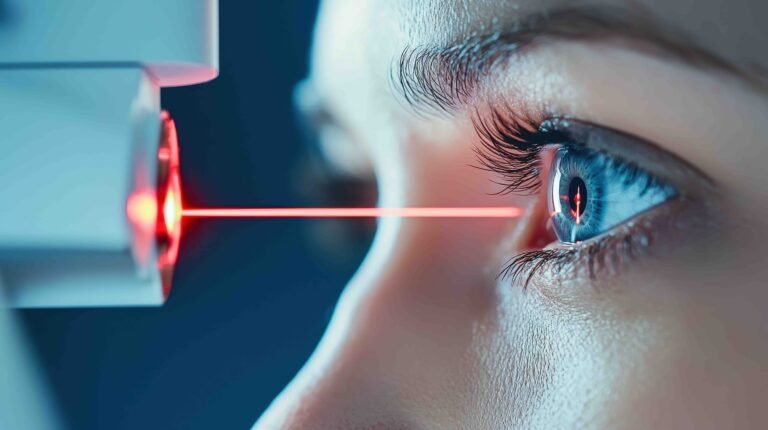
Once the flap is lifted, the excimer laser begins reshaping the corneal tissue. The laser removes microscopic amounts of tissue based on the patient’s prescription and corneal measurements.
This reshaping allows light to focus more accurately on the retina.
The laser works very quickly, and most treatments last only seconds.
3. Repositioning the flap
After the laser reshaping is complete, the corneal flap is carefully repositioned. It naturally adheres to the eye without the need for stitches.
The cornea begins healing immediately.
Because the procedure is fast and performed with numbing drops, most patients feel little discomfort during treatment.
Understanding these steps helps many patients feel more relaxed about the procedure.
For more information about surgical techniques used in refractive surgery, you may explore the section dedicated to LASIK procedures.
Can patients feel anything during LASIK surgery?
A common question patients ask is whether they will feel pain during the procedure.
Thanks to numbing eye drops, LASIK surgery is generally not painful. The drops temporarily block sensation in the eye so that the procedure can be performed comfortably.
Patients may still notice certain sensations during treatment, such as:
- Gentle pressure during the flap creation step
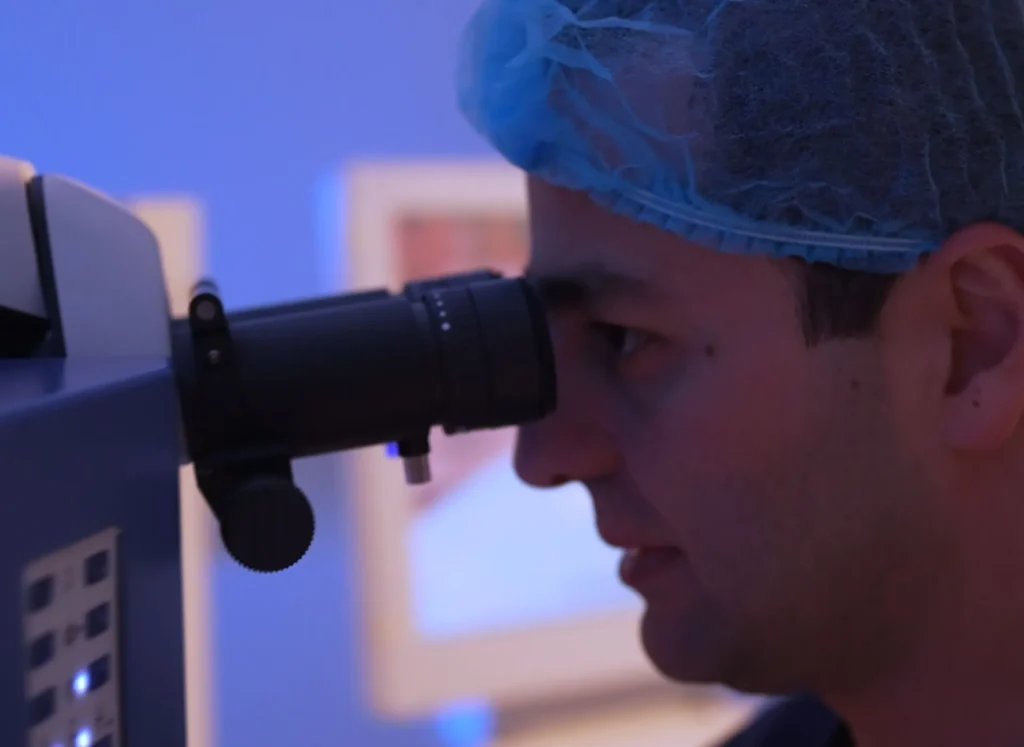
- Bright lights from the laser system
- The need to focus on a fixation target during the procedure
These sensations are usually mild and brief.
Many patients are surprised by how quickly the procedure finishes. The laser itself typically operates for only a short period of time.
It is also normal for vision to appear slightly blurry immediately after the treatment. This temporary blurring improves as the eye begins healing.
Because the procedure is so quick, anxiety often decreases once patients realize how efficiently the steps are completed.
To better understand what patients experience during refractive surgery, you can explore the section dedicated to laser vision correction procedures.
What happens immediately after LASIK surgery?
After LASIK surgery is completed, patients usually rest briefly before going home the same day.
Vision may appear slightly blurry or hazy immediately after the procedure. This is a normal part of the healing process and typically improves within the first day.
Some patients experience temporary symptoms such as:
- Mild burning or irritation
- Watery eyes
- Sensitivity to light
- A sensation similar to having something in the eye
These effects usually improve within a short time.
Post-operative care instructions are important for proper healing. Patients are typically advised to:
- Use prescribed eye drops as directed
- Avoid rubbing the eyes
- Rest the eyes during the first hours after surgery
- Wear protective shields when recommended
Follow-up visits allow me to monitor the healing process and confirm that the cornea is stabilizing properly.
Most patients notice significant visual improvement within the first few days, although vision may continue refining over several weeks.
To learn more about post-operative care, you may explore the section dedicated to LASIK recovery and follow-up care.
Why is proper evaluation important before LASIK surgery?
Safety in LASIK surgery begins long before the procedure itself. The evaluation phase plays a crucial role in determining whether the treatment is appropriate.
During the consultation, I carefully review diagnostic measurements and examine the eye to identify any conditions that could affect safety.
Some of the factors evaluated include:
- Corneal thickness and stability
- Presence of corneal irregularities
- Tear film health
- Stability of the patient’s prescription
Certain conditions may make LASIK less suitable. In those cases, alternative treatments may offer safer outcomes.
This careful screening process helps ensure that only patients who meet the appropriate criteria proceed with laser surgery.
Honest evaluation is essential in refractive surgery. The goal is not simply to perform the procedure, but to protect the patient’s long-term vision and eye health.
If you would like to learn more about the eligibility process, you can explore the section dedicated to LASIK candidacy evaluation.
Why do many patients choose LASIK for vision correction?
Many patients choose LASIK because it can reduce dependence on glasses or contact lenses and improve convenience in daily life.
For individuals who lead active lifestyles, clearer vision without lenses can be beneficial in many situations.
Patients often appreciate that LASIK offers:
- A quick procedure
- Relatively rapid recovery
- Long-lasting visual improvement in appropriate candidates
However, expectations must always remain realistic. LASIK aims to improve vision, but results can vary depending on the patient’s eye structure and prescription.
The decision to undergo LASIK should always follow a careful discussion about potential benefits, risks, and alternative options.
When the right patients undergo the procedure after thorough evaluation, LASIK can be an effective method of vision correction.
If you would like to explore whether this treatment may be appropriate for you, you can learn more in the section dedicated to laser vision correction options.
Conclusion: what happens during LASIK surgery?
Understanding what happens during LASIK surgery can help patients approach the procedure with confidence and realistic expectations.
The process begins with detailed testing to determine whether LASIK is suitable. During the procedure, a thin corneal flap is created, the cornea is reshaped with a precise laser, and the flap is repositioned so healing can begin.
Although the procedure itself is quick, the most important step remains the evaluation that determines whether the treatment is appropriate.
Every patient’s eyes are unique, and choosing the safest approach to vision correction always requires personalized assessment.
I evaluate patients considering LASIK and other refractive procedures at Emirates Hospital Day Surgery & Medical Center in Dubai Motor City and at Harley Street Medical Center in Abu Dhabi.
Scheduling a consultation allows you to receive a detailed examination and clear guidance about the safest options for improving your vision.
Dr. Hassan A. Aziz – Discover more about me
Dubai
Emirates Hospital Day Surgery & Medical Center in Dubai Motor City
Al Hebiah First – Dubai Motor City – Dubai – UAE
Abu Dhabi
Harley Street Medical Center
F8F9+RCW – Villa No. A21 – Al Kasir – Al Marina – Abu Dhabi – UAE