When it comes to ocular health, the retina occupies a position of extreme delicacy. It is, for all intents and purposes, the most complex neurological tissue in the eye, responsible for transforming light into visual signals that the brain interprets as images. I often receive worried patients who, after noticing abnormal symptoms, ask themselves the question: “Can Retinal Tears Heal on Their Own?” It is fundamental to be extremely clear on this point: the answer is no. A retinal tear does not possess the intrinsic capacity to heal or close spontaneously. As a retina specialist in Dubai and Abu Dhabi, at Aziz Ophthalmology, with clinics in Dubai and Abu Dhabi, I address these situations with the utmost clinical rigor, as underestimating the problem can transform a treatable lesion into a retinal detachment, a much more serious condition that seriously puts visual capacity at risk.
Why Can’t a Retinal Tear Heal Spontaneously?
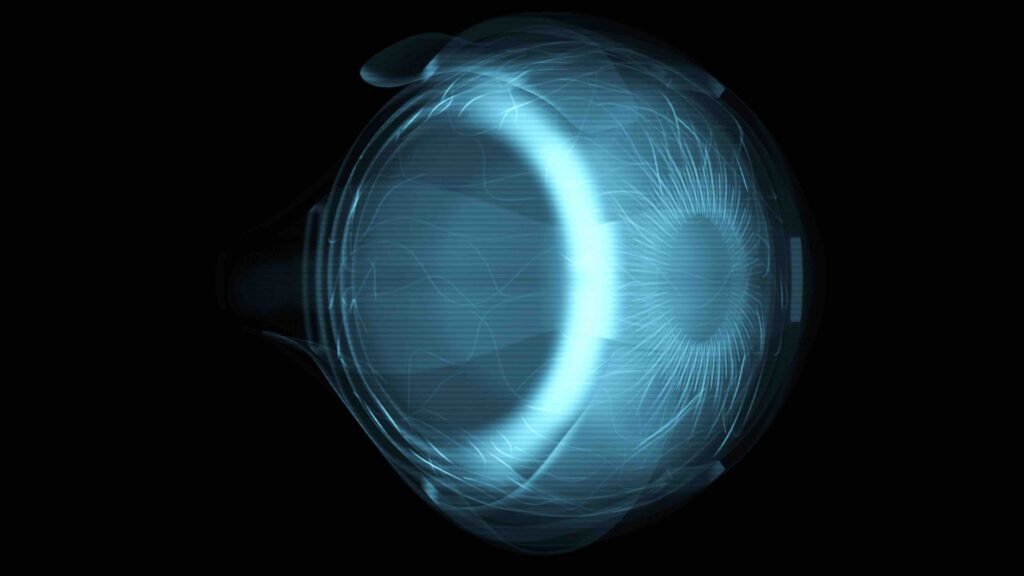
To understand why the body cannot autonomously repair a retinal tear, we must analyze the anatomical structure of the eye. The retina is a thin, nerve-rich tissue held in place by the vitreous body, a gelatinous substance that fills the eyeball. When the vitreous undergoes an aging process and shrinks, it can exert excessive traction at points where it is strongly anchored to the retina. If this traction exceeds the resistance of the retinal tissue, a genuine rupture is generated. Unlike skin or other organs, the retina lacks a cellular regeneration system capable of “welding” the torn tissue; on the contrary, the presence of To understand why the body cannot autonomously repair a retinal tear, we must analyze the anatomical structure of the eye. The retina is a thin, nerve-rich tissue held in place by the vitreous body, a gelatinous substance that fills the eyeball. When the vitreous undergoes an aging process and shrinks, it can exert excessive traction at points where it is strongly anchored to the retina. If this traction exceeds the resistance of the retinal tissue, a genuine rupture is generated. Unlike skin or other organs, the retina lacks a cellular regeneration system capable of “welding” the torn tissue; on the contrary, the presence of vitreous fluid filtering through the tear tends to further lift the tissue, pulling it away from its natural location. This anatomical reality explains why the answer to the question “Can Retinal Tears Heal on Their Own?” is unequivocally no.
This is precisely why waiting is the patient’s worst enemy. If a tear remains open, ocular fluid continues to infiltrate under the retina, gradually separating it from the underlying pigment epithelium and the blood vessels that nourish it. This process transforms a localized lesion into an extensive retinal detachment. In my daily work as an expert in retinal surgery, I unfortunately see cases where the patient waited too long in the hope that the disturbance would vanish on its own. This attitude, although understandable due to the fear of intervention, deprives the eye of the possibility of being saved with minimally invasive treatments, making much more complex and demanding surgery necessary for the visual system.filtering through the tear tends to further lift the tissue, pulling it away from its natural location. This anatomical reality explains why the answer to the question “Can Retinal Tears Heal on Their Own?” is unequivocally no.
This is precisely why waiting is the patient’s worst enemy. If a tear remains open, ocular fluid continues to infiltrate under the retina, gradually separating it from the underlying pigment epithelium and the blood vessels that nourish it. This process transforms a localized lesion into an extensive retinal detachment. In my daily work as an expert in retinal surgery, I unfortunately see cases where the patient waited too long in the hope that the disturbance would vanish on its own. This attitude, although understandable due to the fear of intervention, deprives the eye of the possibility of being saved with minimally invasive treatments, making much more complex and demanding surgery necessary for the visual system.
What Symptoms Should Prompt an Immediate Visit?
The retina, as I have already explained, is a tissue devoid of pain-sensitive nerve endings. This means that a tear does not hurt, which is paradoxically dangerous because the patient does not feel the classic signal of physical damage. This is also why the answer to the question “Can Retinal Tears Heal on Their Own?” is so important: without timely diagnosis and treatment, the condition may progress despite the absence of pain. The signals the visual system sends are of a luminous or mechanical nature. The first warning bell is usually the sudden appearance of flashes of light, often compared to lightning in the dark, visible even when the eyes are closed. These glares are caused by vitreous traction on the retina and are a sign that the tissue is undergoing dangerous mechanical stress.
Another symptom is the appearance of a shower of small black spots or cobwebs, known as myodesopsia or “floaters.” Although many of us have a few physiological floaters, a sudden change—a “storm” of black spots appearing suddenly—almost always indicates that something is changing in the vitreous body or on the retinal surface. Finally, if the lesion evolves toward detachment, one may perceive a shadow or a dark “curtain” covering part of the peripheral vision. One should never wait for that shadow to reach the center of vision, as by that moment, functional loss may already be severely compromised. A visit to a retina specialist in Dubai and Abu Dhabi must take place within a few hours of these symptoms manifesting.
How Does the Specialist Intervene to Prevent Detachment?
The good news is that if the tear is identified before retinal detachment occurs, the treatment is often extremely effective and conservative. The procedure of choice is retinal laser, an outpatient technique that allows creating a healing reaction around the tear. Through targeted laser pulses, a seal is created that “glues” the retina to the ocular wall, preventing vitreous fluid from penetrating under the tissue. This procedure, performed with the utmost precision, prevents retinal detachment from becoming a reality, saving sight with an intervention that lasts a few minutes and requires rapid recovery.
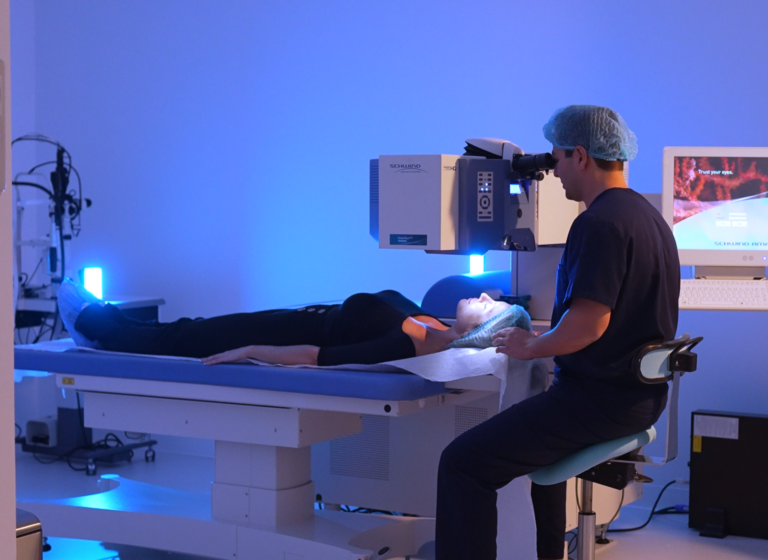
It is an operation that does not require an operating room, but only a consultation chair equipped with laser technology. The sensation is usually that of mild tapping, but the treatment is widely tolerated. My commitment, as a professional, is to perform this maneuver with the utmost attention, ensuring that the entire area surrounding the tear is well protected. At Aziz Ophthalmology, we use targeting systems that allow us to operate in total safety, protecting the macula the heart of central vision from any interference. Intervening promptly on a tear ultimately means having transformed a potential visual tragedy into a highly successful routine procedure.
What If the Tear Has Already Caused a Detachment?
When the question “Can Retinal Tears Heal on Their Own?” is asked too late, meaning when the detachment has already occurred, the surgical approach changes radically. In this situation, the laser is no longer sufficient because the retina has physically moved away from the ocular wall and must be repositioned manually. We therefore resort to vitrectomy, a microsurgery intervention that allows for the removal of the pulling vitreous body, the aspiration of subretinal fluid, and the repositioning of the retina to its original anatomical position, fixing it with the aid of gas or silicone oil. This is a complex procedure that requires specific surgical experience, which I have matured during my years of international training.
Recovery from this type of intervention is more gradual compared to outpatient laser. It requires a convalescence phase where the patient might have to follow specific postural instructions to allow the materials used inside the eye to keep the retina in place. Despite the commitment required, modern surgery offers high success rates, capable of restoring excellent functional vision. However, it is always my primary goal to avoid reaching this point. The culture of prevention and readiness in grasping luminous signals are the most powerful weapons every patient can use to protect their eye, drastically reducing the risk of having to resort to invasive surgeries.
The Role of Patient Education in Retinal Prevention
Retinal prevention begins with awareness. Often, patients mention having had vague symptoms but decided to “wait and see,” hoping for a spontaneous resolution. This waiting is the main cause of avoidable vision loss. Educating my patients to understand the nature of flashes and floaters is an integral part of my work. Not every flash means detachment, but every flash deserves a verification. There is no need to feel embarrassed or afraid to contact the specialist for an emergency consultation: it is infinitely preferable to have a visit that rules out complications rather than ignoring a signal that later turns out to be critical.
At Aziz Ophthalmology, our door is always open for those experiencing these disturbances. Our organization, present in Dubai and Abu Dhabi, is designed to manage retinal emergencies with maximum priority. The diagnostic instrumentation we have allows us to visualize the retina with such clarity that it leaves no doubt for the surgeon. Relying on an expert also means this: having the certainty of a clinical judgment based on solid data. The health of the retina is a heritage too precious to be left to chance or the hope of autonomous healing.
Conclusion: Protect Your Vision, Do Not Delay
The good news is that if the tear is identified before retinal detachment occurs, the treatment is often extremely effective and conservative. This is precisely why the answer to the question “Can Retinal Tears Heal on Their Own?” is so important: because prompt treatment is essential to prevent the condition from progressing. The procedure of choice is retinal laser, an outpatient technique that allows creating a healing reaction around the tear. Through targeted laser pulses, a seal is created that “glues” the retina to the ocular wall, preventing vitreous fluid from penetrating under the tissue. This procedure, performed with the utmost precision, prevents retinal detachment from becoming a reality, saving sight with an intervention that lasts a few minutes and requires rapid recovery.
It is an operation that does not require an operating room, but only a consultation chair equipped with laser technology. The sensation is usually that of mild tapping, but the treatment is widely tolerated. My commitment, as a professional, is to perform this maneuver with the utmost attention, ensuring that the entire area surrounding the tear is well protected. At Aziz Ophthalmology, we use targeting systems that allow us to operate in total safety, protecting the macula, the heart of central vision, from any interference. Intervening promptly on a tear ultimately means having transformed a potential visual tragedy into a highly successful routine procedure.
📞 +971 58 518 4688
💬 +971 58 518 4688
✉️ azizophthalmology@gmail.com
📍 Emirates Hospital Jumeirah, Dubai / Harley Street Medical Center, Abu Dhabi