The sensation of having tired, itchy, or constantly irritated eyes is a condition shared by many patients who turn to my practice, with clinics in Dubai and Abu Dhabi. Many often ask: “Why Do I Have Dry Eyes?” The answer is rarely linked to a single factor; it is rather a complex balance between tear production, their evaporation, and the health of the ocular surface. As a physician, my goal is to go beyond the simple momentary relief offered by moisturizing drops, seeking to identify the root of the problem. In an environment characterized by arid climates, pervasive air conditioning, and intensive use of digital devices, dry eye syndrome has become a clinical condition of primary importance that requires management based on scientific evidence, not just temporary remedies.

The Environmental and Climatic Impact: An Invisible Enemy
Living in the UAE involves unique challenges for the surface of our eyes. The desert climate, characterized by scarce rainfall and high temperatures, promotes the rapid evaporation of the tear film. If we add to this the nearly constant overuse of air conditioning systems, which drastically reduce environmental humidity, we obtain the ideal environment for the development of dry eye. Often, when patients ask me why they suffer from this disorder, the answer lies in the invisible struggle their eyes conduct every day against extremely dry air. This environmental condition alters the stability of the tear film, causing the typical burning sensation that many feel in the late afternoon.
It is not only the external heat but also how we manage our indoor spaces that impacts corneal health. Air conditioning, while essential for comfort, acts as a moisture extractor, leaving our eyes vulnerable. It is fundamental to understand that, in these conditions, basal tear production may not be sufficient to keep the eye protected. At Aziz Ophthalmology, I observe how even young, apparently healthy patients begin to manifest symptoms of dryness due to prolonged exposure to these constant airflows. Adopting environmental protection strategies and using targeted ocular lubricants is often the first step, but it should not be considered the only remedy available to counter this climatic challenge.
The Role of Digital Lifestyle: Why Do Our Eyes Not Blink?
In the technological era, another predominant cause for those who ask themselves “why do I have dry eyes” is the excessive use of screens. Computers, smartphones, and tablets have radically changed our habits: when we are focused on a display, the frequency of our blinking the mechanical act of closing the eyelids decreases by up to 60% compared to the norm. Blinking is the mechanical action necessary to uniformly distribute the tear film over the entire corneal surface; if we do not blink enough, the tear breaks, exposing the cornea to the air and triggering irritation. This is the main reason why, after a day of intense work in a Dubai office, many feel that “sandy” sensation in their eyes.
It is a vicious cycle: the burning pushes us to rub our eyes, but rubbing can cause micro-corneal abrasions or further worsen surface inflammation. Many patients do not realize that their problem is not a “lack of tears,” but an alteration in blink dynamics. For those who work daily in front of a monitor, I always suggest following the 20-20-20 rule: every 20 minutes, look away from the screen for 20 seconds, focusing on a distant object, and force yourself to blink consciously. These measures, though simple, are the first step to improving the quality of the tear film before needing to resort to more complex therapeutic or pharmacological treatments.
Glandular Dysfunctions: The Hidden Cause You Don’t Imagine
Beyond environmental and behavioral factors, there is a very frequent clinical cause that often escapes patients: Meibomian gland dysfunction. These glands, located along the edge of the eyelids, produce an essential lipid component that prevents tears from evaporating too quickly. When the ducts of these glands become obstructed due to chronic inflammation, the use of inadequate cosmetics, or poor eyelid hygiene the oily part of the tear is missing. The result is that the tears, lacking this protective layer, evaporate in an instant, leaving the eye completely exposed. This is one of the reasons why, despite using moisturizing eye drops, relief lasts only a few minutes.
The diagnosis of this dysfunction is a fundamental pillar of my work. It is not enough to tell the patient to “use drops”; one must treat the eyelid inflammation that prevents correct oily secretion. Through targeted eyelid hygiene procedures and the use of warm compresses, we can reactivate the natural functionality of the glands. It is a management plan that requires consistency, but it leads to superior clinical results compared to the simple use of tear substitutes. Identifying that the problem lies in the quality of the tear, and not just in its quantity, is the real leap in quality we make when visiting the clinic between Dubai and Abu Dhabi, ensuring relief that is truly long-lasting.
When Is Dry Eye a Symptom of Another Pathology?
There are situations where dry eye is not an isolated phenomenon but a symptom of a broader systemic condition, such as certain autoimmune diseases or hormonal imbalances. For example, pathologies affecting exocrine glands throughout the body can manifest initially with strong ocular discomfort. Even the use of certain systemic medications such as those for high blood pressure, some antihistamines, or acne medications can drastically reduce tear production. It is for this reason that an eye exam at Dr. Hassan Abdul Aziz’s practice is never limited to observing the eye, but includes a complete medical history, which is indispensable for ruling out systemic causes that would require multidisciplinary collaboration.
Never underestimate the persistence of symptoms. If the sensation of dryness is accompanied by joint pain, chronic fatigue, or other systemic disturbances, it is necessary to investigate more deeply. The ocular surface is an excellent indicator of general health; treating it as an isolated compartment is a mistake that often prevents the definitive resolution of the problem. My role, as an ophthalmologist in Dubai, is precisely that of connecting the dots, analyzing every clue to build a clinical picture that offers the patient a targeted therapy, which is effective both for the eye and for their general health state, ensuring vision is protected from every possible collateral risk.
Why Do “Do-It-Yourself” Methods Often Worsen the Situation?
A widespread error is purchasing over-the-counter eye drops at random, often those defined as “whitening” for red eyes. These products act by vasoconstricting the superficial capillaries, but they do not treat dryness and, in fact, their prolonged use can cause a rebound effect that makes the eye even redder and more irritated. Similarly, the use of homemade solutions or non-certified products can alter the pH of the tear film, worsening the underlying inflammation. The ocular surface is an extremely sensitive membrane that requires products with a correct osmotic balance and free of toxic preservatives, which could damage the corneal epithelial cells if used frequently.
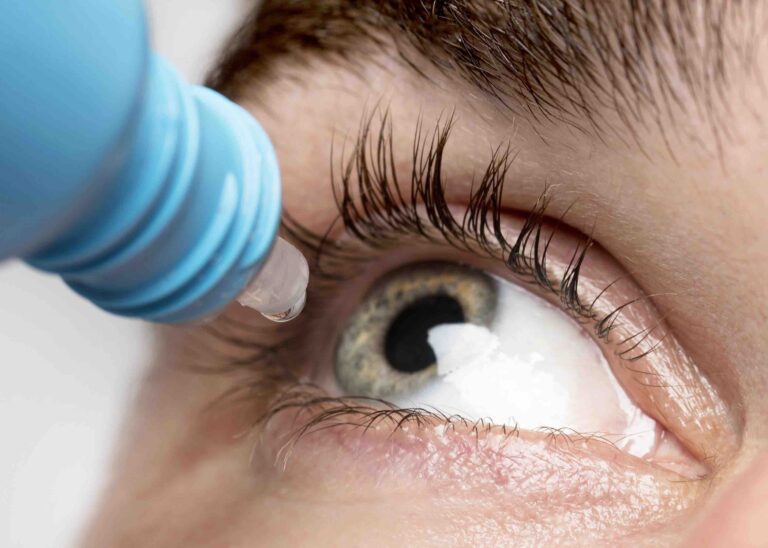
Correct management requires “tear substitute” eye drops that are preservative-free and formulated to mimic the natural composition of the tear. Relying on products chosen with medical criteria is the only way to avoid further inflaming a surface that is already suffering. My recommendation is always to avoid attempts based on the advice of acquaintances or online advertising. Every dry eye has its own clinical dignity and requires a specific product. Coming to see me at the clinic allows us to sort through this confusion of products, choosing what is really useful and safe, ensuring your eyes have real comfort, without the risk of unwanted side effects.
Conclusion: A Path Toward Ocular Wellness
Dry eye is a complex condition but, in most cases, fully manageable with a rigorous and personalized clinical approach. It is not necessary to resign yourself to living with daily discomfort. Through a precise diagnosis that identifies environmental, behavioral, or glandular causes, it is possible to restore the comfort your eyes deserve. Aziz Ophthalmology is at your disposal to analyze your situation thoroughly and propose a therapeutic plan based on the long-term health of the ocular surface. Protecting your eyes also means improving your daily life; do not let the burning sensation be a constant limit. I invite you to book a consultation to begin the journey toward an ocular surface that is finally healthy and well-hydrated, with the certainty of being followed by an expert who puts your health first.
📞 +971 58 518 4688
💬 +971 58 518 4688
✉️ azizophthalmology@gmail.com
📍 Emirates Hospital Jumeirah, Dubai / Harley Street Medical Center, Abu Dhabi